
Influencer Marketing Is the Most Overrated First Move for Early-Stage Startups
By Saili,
Co-Founder & Brand Strategist, The Empror
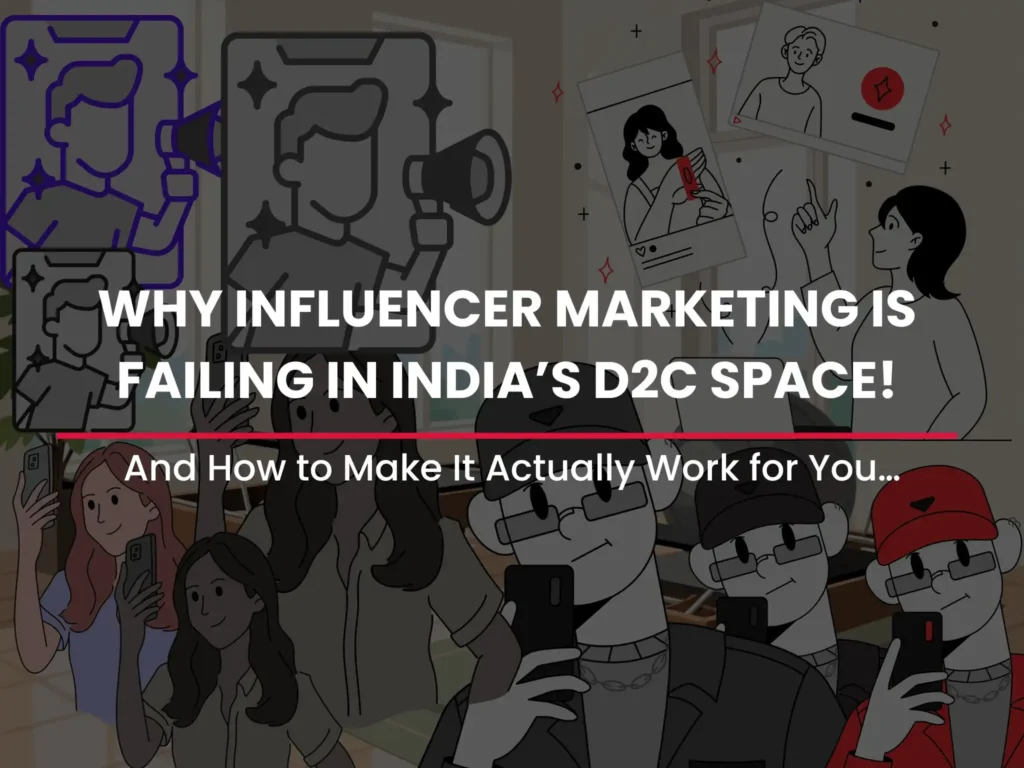
There’s a pattern I’ve noticed in the Indian startup ecosystem, and I’ve seen it repeat so many times that it has almost become predictable.
A new founder builds a product they truly believe in. They launch the brand, open an Instagram page, set up a Shopify website… and the next question immediately becomes:
“Okay, now which influencer should we get?”
It has become the default marketing move in India today.
And honestly, I understand why.
When you’re new, visibility feels like survival and sales feel urgent. You want proof that your brand exists, that someone, somewhere is noticing your effort.
Influencer marketing looks like the fastest way to get there.
But it’s here where things start to go wrong.
The Reality of Today’s Indian Consumer
Let’s pause and look at what the consumer is experiencing.
Every time you open Instagram or YouTube, the same influencers are promoting new “life-changing” products every other day:
One day a face wash. Next week a different face wash. After that, another one claiming to be the “real glow secret.”
Imagine being a regular consumer in the middle of this.
You might genuinely want to buy something useful… but before you make the decision, another brand comes up, promoted by the same creator.
At that point, what do you trust? Nothing.
Not because consumers are skeptical… but because they are overwhelmed.
There is more branding than belief. More shouting than substance. More campaigns than clarity.
That is the actual environment early-stage founders are marketing into.
Influencer Marketing Doesn’t Work When the Brand Isn’t Ready
Many new founders assume:
“If people just see us, we will make sales.”
But visibility is not the first milestone. Understanding is.
If the consumer cannot understand:
- What your brand stands for
- Why it exists
- How it is different from the other 200 similar products in the market
…no amount of influencer content can change their decision-making.
Influencers are great at capturing attention but attention without meaning does not convert.
And early-stage brands often don’t realize this, because:
- They are still figuring out their own messaging
- They are still shaping their core identity
- They are still discovering what problem they really solve
- They themselves haven’t defined their position in the consumer’s mind
If the brand isn’t clear, influencers only broadcast the confusion to a larger audience.
Think of the Brands You Truly Remember
Chances are, you remember them not because you saw them first, but because eventually:
- You understood what they stood for
- Their message made sense
- They fit into your life
- You trusted them
Meaning came before marketing.
The problem is, most early-stage founders reverse the sequence:
Product → Influencers → Sales instead of Meaning → Identity → Message → Marketing → Sales
That’s why campaigns feel disappointing. Not because influencers failed, but because the brand wasn’t ready to be represented.
Founders Don’t Fail Because of Marketing. They Fail Because of Lack of Clarity.
This is difficult to accept, but it is true:
Most early-stage founders don’t need more marketing. They need more understanding of their own brand.
Before answering:
“How do we reach more people?”
They need to answer:
“What should people remember us for?”
When that clarity is missing, the market feels like chaos:
- Mixed signals
- Unclear communication
- Constant comparison
- No emotional anchor
And in such cases, influencer campaigns become like loud music coming out of an empty speaker.
Noise, but no depth.
Influencers Are Not Brand Builders
They are amplifiers.
If your brand already has:
- A story
- A distinct identity
- A core belief
- A clear position
…then they can accelerate your growth.
But if those things are still unclear, then influencers do not help, they only expose the gap.
A brand is not built in the consumer’s screen.
It is built in their mind.
Only after that does the marketing matter.
Before Hiring Influencers, Ask Yourself:
- What difference does my brand bring to the category?
- If someone removed my brand from the market tomorrow, what gap would be felt?
- Can my brand be explained in one sentence that a consumer can repeat?
- Do we have a personality or just products?
- Are we ready to let someone else represent us?
If the answers are vague, then influencers are premature.
Conclusion
Influencer marketing is not the enemy. It is just the step ten, not step one.
If your brand is still finding its footing, still shaping what it stands for, still discovering its place in the consumer’s life, then no influencer in the world can compensate for that missing clarity.
Brands are built in the consumer’s mind and not on Instagram. And that takes:
- Thought
- Honesty
- Understanding
- Differentiation
- Consistent storytelling
Once these pieces fall into place, then yes, influencer marketing can accelerate everything you’ve created. It can amplify the message you’ve already planted.
But until then, it’s like hiring a loudspeaker before writing the speech.
So to every early-stage founder reading this; before you buy shout-outs, first build something worth shouting about.
Marketing is definitely powerful but meaning is what makes marketing work.
Build meaning first, everything else becomes easier.
Frequently Asked Questions (FAQs)
Ready to Explore Your Brand’s Potential?
If you’re building something meaningful and you feel your brand could communicate more clearly, stand out better, or connect deeper, let’s talk.
Just a conversation to understand:
– where your brand is today,
– where you want it to go,
– what might be holding it back.